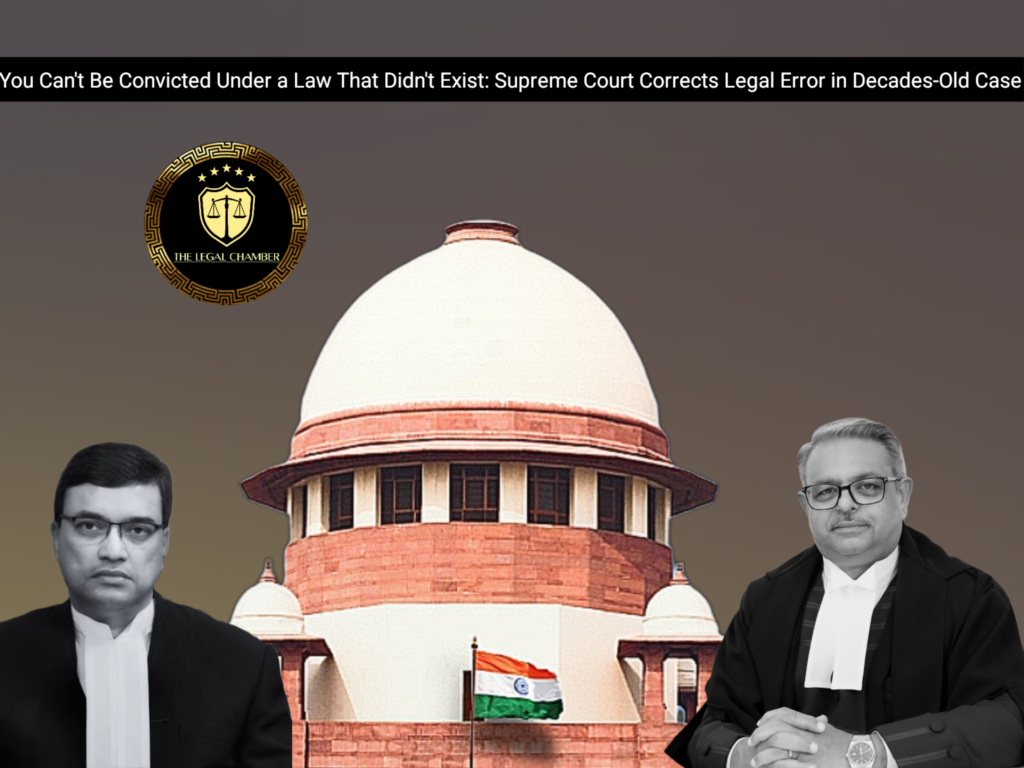
In a significant ruling, the Supreme Court set aside the conviction under Section 195-A IPC, holding it unconstitutional for being applied retroactively, violating Article 20(1). However, it upheld the conviction under Section 506-B IPC for criminal intimidation. The Court directed the State to reconsider the deceased appellant’s termination and terminal benefits, considering only the surviving conviction.
Facts Of The Case:
In 1999, a minor girl, who was a witness in a molestation case, set herself ablaze and subsequently died. Before her death, she alleged in a dying declaration that Sheikh Akhtar, a court official (Naib Nazir), and three others had threatened to kill her and her father if she did not compromise her court testimony. Based on this, Akhtar was convicted in 2007 by a Sessions Court under Sections 305 (abetting suicide of a child) and 506-B (criminal intimidation) of the IPC. After Akhtar’s death in 2015, his family continued the legal appeal, hoping a quashed conviction would secure his terminal benefits from 30 years of service. The High Court, in 2024, acquitted him of Section 305 but alternatively convicted him under the newly inserted Section 195-A (threatening a witness), while maintaining the Section 506-B conviction. The Supreme Court ultimately set aside the Section 195-A conviction as it did not exist in 1999, but upheld the Section 506-B conviction, confirming the criminal intimidation charges were proven. It then directed the state to reconsider the termination of his service and the family’s claim to his terminal benefits.
Procedural History:
The procedural journey began with the conviction and sentencing of Sheikh Akhtar by the Sessions Court under Sections 305 and 506-B of the IPC in 2007. Following his death during the pendency of his appeal, his legal heirs continued the challenge before the High Court. The High Court, in 2024, set aside the conviction under Section 305 but alternatively convicted him under Section 195-A of the IPC, while maintaining the sentence and the conviction under Section 506-B. Aggrieved by this outcome, the appellants approached the Supreme Court. The Supreme Court, in its 2025 judgment, partly allowed the appeal by setting aside the conviction under Section 195-A as constitutionally impermissible but ultimately upheld the conviction under Section 506-B, leading to the dismissal of the appeal on that count.
READ ALSO:Supreme Court Facilitates Settlement in Rape and Cheating Case, Orders Return of Money and Gold
Court Observation:
The Supreme Court made several critical observations, foremost ruling that the conviction under Section 195-A IPC was unsustainable as it was applied retroactively, violating the constitutional prohibition under Article 20(1). On the evidence, the Court observed that minor inconsistencies in witness accounts regarding the number of threats did not discredit the core prosecution case, which was consistently supported by multiple witnesses. It further held that the failure of some witnesses to name Akhtar specifically did not render the direct evidence of intimidation unreliable. The Court also noted the High Court’s lapse in not independently analyzing the Section 506-B IPC conviction after introducing Section 195-A, a gap the Supreme Court itself remedied by re-examining the evidence to affirm the criminal intimidation charge. Finally, while upholding the 506-B conviction, the Court made a significant humanitarian observation, directing the State to freshly reconsider the denial of terminal benefits to the deceased’s family, considering that the graver charges had been set aside.
Final Decision & Judgement:
The Supreme Court partly allowed the appeals. It set aside the conviction under Section 195-A IPC as it was applied retrospectively, in violation of Article 20(1) of the Constitution. However, the Court upheld the conviction under Section 506-B IPC for criminal intimidation, finding the evidence against the deceased appellant conclusive. Consequently, the appeals were dismissed on the merits of the conviction. Nonetheless, in exercise of its constitutional powers, the Court issued a consequential direction to the State of Madhya Pradesh to reconsider the matter of the appellant’s termination from service and the family’s claim to his terminal benefits de novo, considering that the graver charges had been quashed and adopting a humanitarian approach towards his surviving heirs.
Case Details:
Case Title: Jameela & Ors. vs. The State of Madhya Pradesh
Citation: 2025 INSC 1121
Criminal Appeal No.: Criminal Appeal Nos. 3641-3642 of 2025
Date of Judgement: September 15, 2025
Judges/Justice Name: Justice Dipankar Datta and Justice Augustine George Masih
Download The Judgement Here