Facts Of The Case:
Procedural History:
The procedural history of the case began with the Trial Court (Sessions Court) acquitting all fifteen surviving accused of charges including murder. The State of Karnataka and the informant then filed separate appeals before the High Court. The High Court, vide a common judgment, partly allowed the appeals—it confirmed the acquittal of eight accused but convicted the remaining seven (Accused Nos. 1 to 6 and 11) under various sections of the IPC read with Section 149. Aggrieved by their conviction, these seven accused filed appeals before the Supreme Court. The Supreme Court, after hearing the parties and scrutinizing the record, dismissed the appeals and upheld the conviction and sentence awarded by the High Court, finding no perversity or error in its judgment.
READ ALSO:Supreme Court Explains “Sufficient Cause”: Key Tests for Granting Stay on a Money Decree
Court Observation:
The Supreme Court made several key observations. It held that ocular testimony, especially of an injured eyewitness, prevails over medical evidence unless irreconcilable, and the medical estimate of the time of death could not override PW-1’s consistent account. The Court found the Trial Court’s reasoning perverse for discarding PW-1’s reliable testimony based on an unsubstantiated defense theory of an illicit relationship and a minor discrepancy in timing. It affirmed the High Court’s balanced scrutiny, which correctly separated credible evidence from chaff, and reiterated that an appellate court can reverse an acquittal if the trial court’s view is manifestly unreasonable or based on a misappreciation of evidence.
Final Decision & Judgement:
The Supreme Court dismissed the criminal appeals filed by the convicted accused. It upheld the judgment of the High Court, affirming the conviction of the appellants (Accused Nos. 1 to 6 and 11) for offences including murder (Section 302 read with Section 149 IPC) and other charges. The Court found no merit in the challenges against the High Court’s reversal of the Trial Court’s acquittal, holding that the High Court’s view was balanced, based on a correct appreciation of evidence, and that the Trial Court’s decision to extend benefit of doubt was perverse. The appellants were directed to continue serving their sentences, primarily life imprisonment.
Case Details:
Case Title: Sri Chikkegowda & Ors. vs. State of Karnataka Etc.
CITATION: 2025 INSC 1213
Criminal Appeal No(s): Criminal Appeal Nos. 541-543 of 2015
Date of Judgement: October 07, 2025.
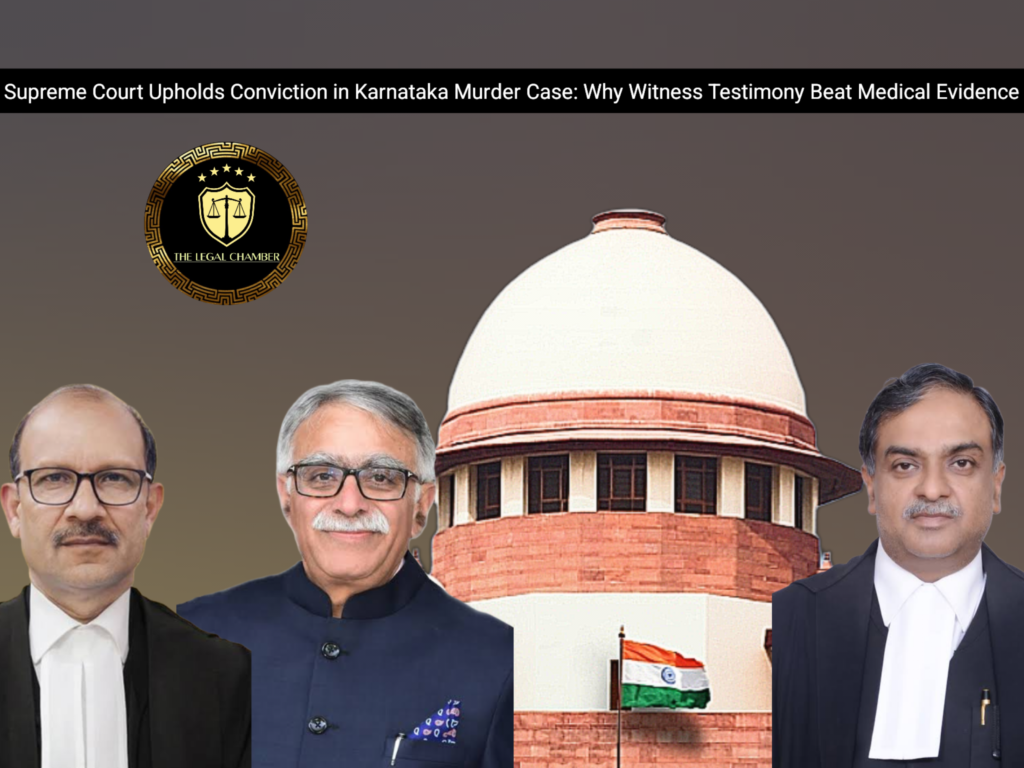
Judges/Justice Name: Justice Vikram Nath &  Justice Sanjay Karol, and Justice Sandeep Mehta
Download The Judgement Here