Facts Of The Case:
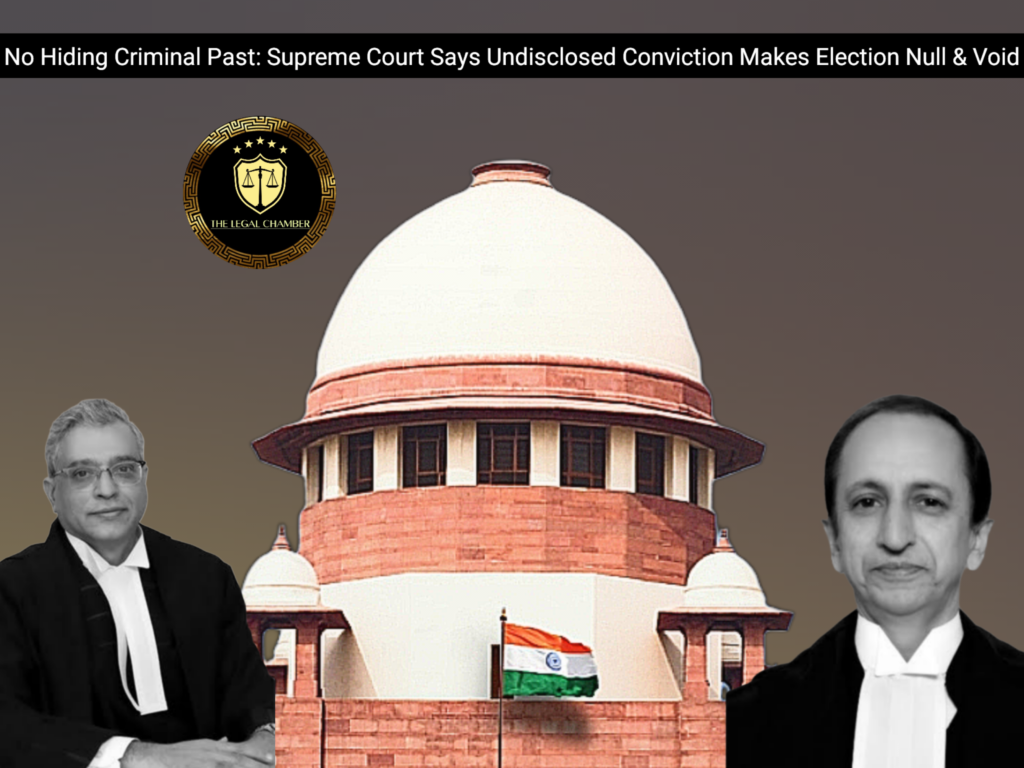
The petitioner, Poonam, was elected as a Councillor from Ward No. 5 of Nagar Parishad, Bhikangaon in October 2022. However, her election was challenged by the first respondent, Dulesingh, on the ground that she had failed to disclose a previous conviction in her nomination affidavit. Specifically, on August 7, 2018, Poonam had been convicted under Section 138 of the Negotiable Instruments Act, 1881 (for cheque dishonour) and sentenced to one year of rigorous imprisonment along with a compensation order. Although she appealed this conviction, it was still in force at the time she filed her nomination papers on September 9, 2022. Rule 24-A of the Madhya Pradesh Nagar Palika Nirvachan Niyam, 1994, mandatorily requires candidates to declare any past convictions. Poonam’s non-disclosure led the trial court to declare her election null and void, a decision upheld by the High Court. She then approached the Supreme Court, arguing that the offence did not involve moral turpitude, her conviction was later set aside in December 2022, and that the non-disclosure did not materially affect the election’s outcome. The Supreme Court, however, dismissed her petition, emphasizing the voter’s fundamental right to accurate information and the mandatory nature of disclosure rules.
Procedural History:
The legal journey began when the first respondent, Dulesingh, filed an election petition before the trial court under Section 20 of the Madhya Pradesh Municipalities Act, 1961, challenging Poonam’s election as Councillor. The primary ground was her failure to disclose her August 2018 conviction under the Negotiable Instruments Act in the mandatory affidavit filed with her nomination form, as required by Rule 24-A of the election rules. The trial court, after examining evidence, held that this non-disclosure was a material breach and, by its judgment dated February 17, 2025, set aside her election and declared the seat vacant. Aggrieved, Poonam filed a revision application before the High Court under Section 26(2) of the Act, arguing that her subsequent acquittal in December 2022 rendered the conviction irrelevant and that the election petitioner had failed to prove the result was materially affected. The High Court, in its revisional jurisdiction, dismissed her application, upholding the trial court’s finding that the breach of mandatory disclosure rules at the time of nomination itself attracted disqualification. Following this dismissal, Poonam invoked the extraordinary appellate jurisdiction of the Supreme Court by filing the present Special Leave Petition under Article 136 of the Constitution, which was ultimately dismissed, finalizing her disqualification.
READ ALSO:Supreme Court: Death of Appellant Before Hearing Renders Appellate Judgment Void
Court Observation:
The Supreme Court made several key observations in dismissing the petition. It firmly held that the petitioner’s failure to disclose her subsisting conviction at the time of filing the nomination constituted a suppression of material information, directly violating the mandatory requirements of Rule 24-A of the 1994 Rules. The Court emphasized that the voter’s right to information under Article 19(1)(a) of the Constitution is paramount, and such non-disclosure creates an impediment to the free exercise of electoral choice, rendering the detailed inquiry into whether the election result was “materially affected” unnecessary in such cases of pure nondisclosure. It rejected the petitioner’s argument that the offence (cheque dishonour) was not one of moral turpitude, stating that the statutory disclosure requirement is absolute and does not permit such dilution or condonation based on the nature of the offence. The Court also distinguished the precedents cited by the petitioner (Ravi Namboothiri and Karikho Kri), noting that the specific statutory mandate in the present case required disclosure of a conviction carrying a sentence of one year or more, which was squarely applicable. Furthermore, it held that the candidate’s eligibility is determined as on the date of nomination submission, and a subsequent acquittal after the election is irrelevant to the validity of the nomination process. The Court concluded that the improper acceptance of her nomination, based on a false affidavit, was sufficient to declare the election void, and no exceptional circumstances existed to warrant an exercise of its discretionary power under Article 136 of the Constitution.
Final Decision & Judgement:
Case Details:
Case Title: Poonam vs. Dulesingh & Ors.
CITATION: 2025 INSC 1284
Appeal No.: Special Leave Petition (Civil) No. 12000 of 2025
Date of Judgement: November 06, 2025
Judges/Justices Name: Justice Pamidighantam Sri Narasimha & Justice Atul S. Chandurkar